How AI Agents Transform Digital Presence Audits: A Consultant's Guide
AI agents are turning the multi-hour manual audit process into a workflow that completes in minutes — producing deeper, more consistent results and transforming the consultant's business model.

Audit number eight is where it falls apart
The first digital presence audit of the day is thorough. You open the website, check the mobile view, run the page speed test, look at the Google Business Profile, skim Facebook and Instagram, check the schema, screenshot everything that matters.
By the fourth audit, you're moving faster. By the eighth, you're skipping the schema check because you've done it seven times already and it's probably fine.
It usually isn't. The inconsistency isn't laziness. It's fatigue, and it's the single biggest hidden quality problem in consulting work that's priced by the deliverable rather than the hour.
That's the real argument for AI agents in a digital presence audit. Not speed for its own sake, but the same checklist applied with the same attention on the first audit and the eightieth.
What a manual audit actually costs
If you've done these, you know the shape of it. Fifteen or more sources: the website, Google Maps, Facebook, Instagram, LinkedIn, YouTube, TikTok, PageSpeed Insights, a schema validator, the sitemap, maybe a directory listing or two.
Realistically that's two to three hours of collection and another hour of writing, per business. Which means either the client pays for four hours of your time on something that feels like clerical work, or you absorb it as a sales cost and quietly resent it.
Neither of those is a business model that scales past a handful of clients per month.
What changes when an agent runs the collection
The checking happens in parallel
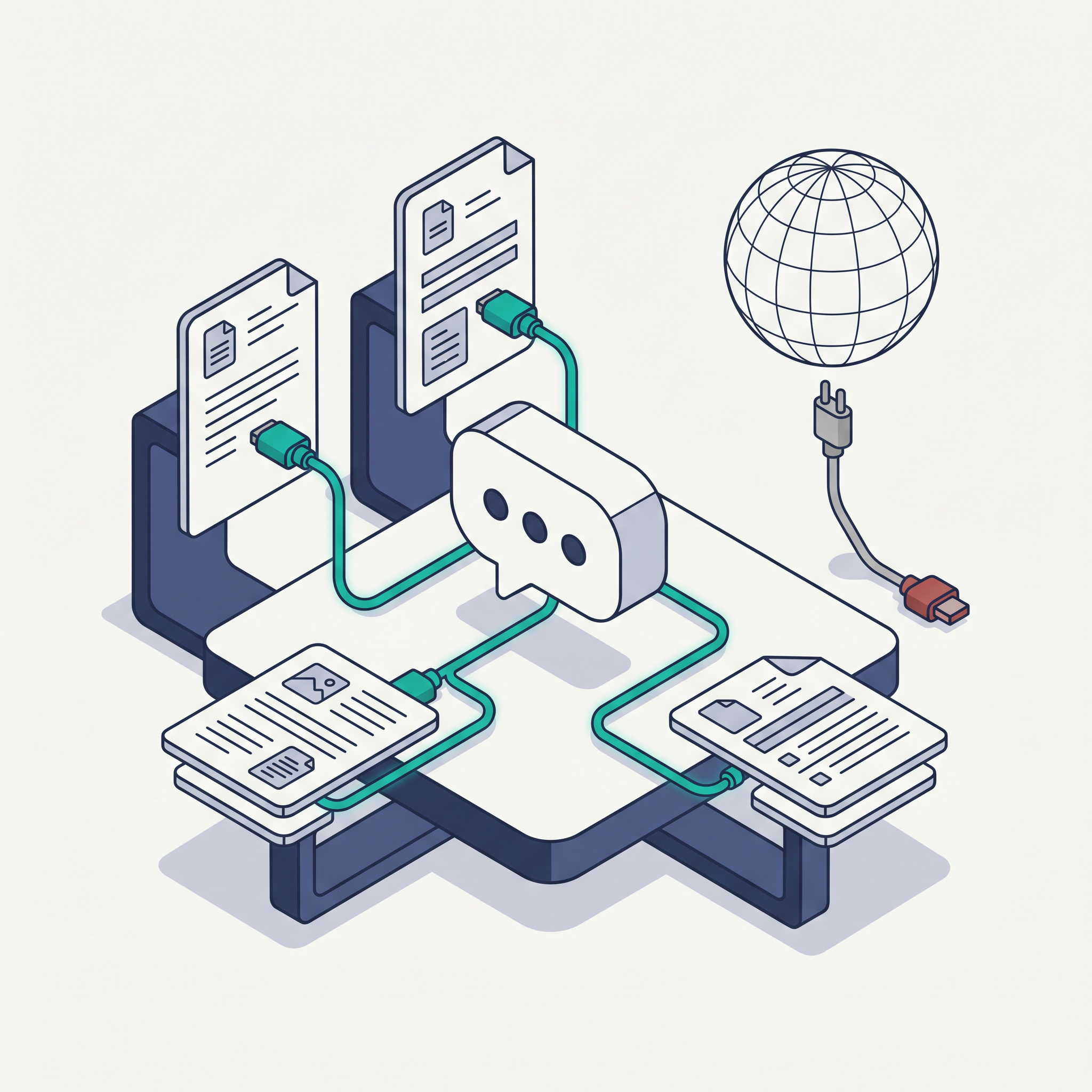
An agent queries the site, the profile, the social platforms, and the technical basics at the same time instead of one tab at a time. The part that eats an hour of clicking takes a couple of minutes.
The rubric runs identically every time
Google presence: profile claimed, categories correct, hours accurate, photos recent, reviews answered.
Website health: mobile layout, load time, HTTPS, broken links, obvious crawl blockers.
Social: profiles exist, links match, posting is current, the brand presentation is coherent.
SEO basics: title tags, meta descriptions, heading structure, schema.
Conversion: a visible call to action, a working form, a booking path, a phone number a human can tap.
Same criteria for every business, which sounds like a small thing until you compare two of your own reports from a busy month and see the gap.
An AI audit report arrives structured, not scrambled
The valuable part isn't the scoring. It's that findings land in categories (passed, missing, at risk) with recommendations ordered by impact, instead of a page of screenshots you then have to interpret at 10pm.
Where automated audits still fall short
Be clear-eyed about this, because overselling it is how consultants get burned.
- Blocked or broken sources. Some sites rate-limit bots. Some businesses have a Google Business Profile that a machine can't fully read. A good audit flags those as "needs manual check" rather than guessing.
- Reviews that aren't on Google. If a restaurant's reputation lives on Yelp and OpenTable, an audit that only reads Google will describe a business that doesn't exist.
- Anything requiring judgment. Whether a homepage headline is any good is not a scoring question. Neither is whether the brand looks trustworthy to a 55-year-old buyer.
- Context you have and the agent doesn't. Industry norms, local competitors, the client's actual capacity to execute.
The agent handles the gathering. You handle the meaning. That division is what makes the deliverable better instead of just faster.
How the engagement actually looks
Before the first call. The prospect submits a business name and website. A preliminary automated audit runs. You walk into the call knowing their three worst problems, and the prospect has already seen something specific about their own business. That changes the tone of the conversation completely.
During the engagement. The agent produces the full baseline. You review it, cut the findings that don't matter, add the strategic layer, and rewrite the recommendations in language the client will act on.
After the engagement. Monthly re-audits, which are impossible to deliver profitably by hand and trivial to deliver from a scheduled agent. That turns a one-off project into a retainer with almost no added delivery cost.
The pricing conversation nobody warns you about
When the audit takes four hours, you charge for four hours, and the client compares your fee to the price of a tool that produces a PDF. When the audit takes ten minutes, you can give the baseline away and charge for the interpretation, the prioritisation, and the implementation.
That's a better business, but it does require you to stop selling the report. The report is an artefact. The advice is the product.
Where to start
Pick a business you know well, run an automated audit on it, then compare the findings against what you'd write by hand. You'll find a couple of things the agent caught that you'd have skipped on a busy Tuesday, and probably a couple where you disagree, which tells you which parts of the rubric need your judgment.
Webcheckhub was built for exactly this handoff: it runs the automated audit across Google presence, website health, social, SEO, and conversion readiness and produces a client-ready report you can annotate. Use it for the collection layer, keep the thinking for yourself. If you'd rather have an experienced team run the audit and the strategy with you, Solutions Elites does both.
Sources and further reading
These references were used to check the facts in this article. Quoted or adapted material is used under the licence shown beside each source, with credit to the original publisher.
- 1.AI Risk Management FrameworkNIST· nist.gov·Public domain (U.S. Government work)
Watch the explainer
Videos are embedded with YouTube's official player and credited to their creators. We never re-host third-party video; playback and reuse follow the licence stated by the owner.
Credited to its creator and original publisher; playback follows the creator's own terms.
5
Core Areas Audited
28+
Checkpoints Scanned
100
Free — No Credit Card
Run your free digital presence audit
See exactly where your business stands across Google, website, social media, SEO, and conversion — with a client-ready report.
Check Your Digital Presence — Free
Webcheckhub Editorial Team
PublisherPublished by Webcheckhub, a digital presence audit platform. Our articles are researched and produced by our editorial team, with AI assistance for drafting, and reviewed for accuracy against current industry standards and Google's official guidelines.
© 2026 Webcheckhub. All rights reserved. This article is original content and may not be reproduced without written permission.
Digital growth partner for Webcheckhub
Contact us
Questions about this guide, or want your website, Google profile or automations handled by specialists? Reach out to the Solutions Elites team and we'll reply with a straight answer.